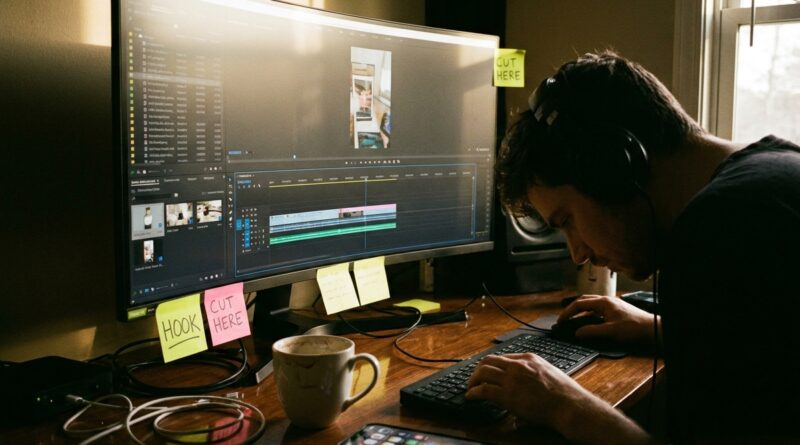
The ‘Hook-First Timeline’ Hack: Build Your Reels Backwards So Viewers Never Swipe Away
You film a Reel in a nice, logical order. Intro first. Main point second. Wrap-up last. Then you post it and watch the retention graph fall off a cliff before your sentence even gets going. That is maddening, especially when you already tried new captions, better music, and cleaner cuts. If that sounds familiar, the problem may not be your idea. It may be your editing order. A hook-first timeline flips the process around. Instead of building your video from scene one to scene last, you start by finding the strongest opening second and build everything else to support it. That small change can make a weak post feel instantly sharper. It also gives you a much better way to come up with video editing hook ideas for reels and tiktok, because you stop guessing what might grab people and start editing around the exact moment that already does.
⚡ In a Hurry? Key Takeaways
- Start your Reel by choosing the most attention-grabbing second first, then build the rest of the edit around it.
- Test 3 to 5 opening lines, visuals, or captions before you lock the rest of the timeline.
- You do not need new gear or a new app. This works with footage and editing tools you already use.
Why your current editing flow may be hurting retention
Most people edit in filming order because it feels natural. You hit record, do your intro, explain the thing, and end with a call to action. That makes sense for a YouTube video. It is often a bad fit for short-form feeds.
Reels and TikTok are not polite places. People do not wait for you to warm up. They decide fast. Sometimes in under a second.
So if your first clip is you adjusting the camera, smiling, or saying, “Hey guys, today I’m going to…” you have already lost a chunk of viewers.
The fix is simple. Stop asking, “What happened first?” Start asking, “What would make someone stop scrolling right now?”
What a hook-first timeline actually means
A hook-first timeline is exactly what it sounds like. You begin your edit with the strongest possible opening moment, not the first thing you filmed.
That opening could be:
- A bold claim
- A surprising result
- A mistake people keep making
- A visual before-and-after
- A line that creates curiosity
Then you place the rest of the footage behind that moment like support beams. The body of the video exists to pay off the promise made in the first second.
A simple example
Let’s say you filmed a 30-second video about fixing flat-looking phone videos.
The filmed order might be:
- “Hi, here are three ways to improve your phone footage.”
- Tip one
- Tip two
- Tip three
The hook-first order might be:
- “This one phone setting makes your video look less cheap.”
- Quick before-and-after shot
- Show the setting
- Brief explanation
- Optional second tip if pace still feels good
Same footage. Better start.
How to build your Reel backwards in practice
Step 1: Find the payoff before the intro
Scrub through your footage and look for the clip, sentence, or reaction that gives the strongest jolt of interest.
Ask yourself:
- What is the most useful moment?
- What line would make me stop?
- What visual proves there is a payoff coming?
That clip goes first, even if it happened halfway through filming.
Step 2: Write 3 to 5 hooks before you finish the edit
This is where creators often get stuck. They edit the whole video, then panic-write one opening caption and hope for the best.
Do the opposite. Come up with several opening options first.
Good video editing hook ideas for reels and tiktok usually fit one of these buckets:
- Problem hook: “Your Reels keep dying in the first 2 seconds for one simple reason.”
- Mistake hook: “Stop editing your short videos in filming order.”
- Result hook: “This tiny edit can lift retention without new gear.”
- Curiosity hook: “I rebuilt this Reel backwards, and it finally held attention.”
- Proof hook: “Watch what happens when the best line goes first.”
You do not need all five in the final post. You just need options.
Step 3: Cut faster after the opening second
Once the hook lands, your next job is to reward the click. That means removing anything that slows the pace.
Trim:
- Long greetings
- Repeated phrases
- Extra setup
- Shots that do not add meaning
If a clip does not strengthen the promise from the opening, it probably goes.
Step 4: Add text that supports the hook, not competes with it
On-screen text should make the opening easier to understand in silence. It should not turn the screen into a wall of words.
Keep it short. Think:
- “Edit this part first”
- “Your intro is too slow”
- “Put the payoff first”
Strong text helps because many people see your words before they fully hear your audio.
Step 5: Save alternate versions
If you have one solid video, you may actually have three posts hiding inside it. Export different hook versions with the same middle and ending.
This is one of the easiest ways to learn what your audience responds to without filming again.
Why this works so well right now
Feeds are crowded. Attention is shorter. And a lot of creators are using the same effects, same sounds, and same template styles.
That means the first second matters more than the polish.
A hook-first workflow helps because it forces clarity. You are deciding the point of the video before getting lost in transitions, fonts, or music choices.
It also works nicely with AI editing helpers. If you know the key moment, key line, and key promise, you can guide those tools much better. Instead of asking an app to “make this viral,” you are telling it exactly which clip should lead and why.
Common mistakes when trying hook-first editing
Starting with energy that has no payoff
Shouting, pointing, or using a flashy zoom is not enough. If the opening creates excitement but the next few seconds do not explain or prove anything, viewers still leave.
Using a hook that feels misleading
Do not overpromise. If your hook says “This changes everything,” your video better earn that line. A strong hook is not clickbait. It is a clear promise.
Keeping the old intro anyway
Some creators find the better opening, then still tuck the original intro right after it. That often kills the pace again. Once the hook is in place, get to the point.
Overediting the wrong part
Fancy transitions are fun. But if your first second is weak, they will not save the post. Put your energy into the opening first.
A quick hook-first workflow you can use today
Here is a five-minute version if you want to rescue an underperforming draft this week:
- Duplicate your current project.
- Find the strongest sentence or visual in the whole video.
- Move that moment to the first second.
- Cut the original intro.
- Add one short text overlay that says the main benefit or problem.
- Trim every pause longer than half a beat.
- Export two different hook versions and compare results.
That is it. No new camera. No course. No editing marathon.
Where templates still fit in
This does not mean trends and templates are useless. They can absolutely help with pacing and style. The catch is that a template should support your hook, not replace it.
If you want a smart way to study what is already working without copying it blindly, read The ‘Template Tracker’ Hack: Turn Today’s Viral CapCut & Reels Edits Into Your Own Repeatable Style in 15 Minutes. It pairs nicely with a hook-first workflow because you can borrow strong structure while still making the opening fit your own footage and voice.
At a Glance: Comparison
| Feature/Aspect | Details | Verdict |
|---|---|---|
| Editing order | Traditional editing follows filming order. Hook-first editing starts with the strongest attention-grabber. | Hook-first is better for short-form retention. |
| Time and tools | You can do it inside your current app with your existing clips. No extra gear needed. | Easy upgrade with low effort. |
| Best use case | Works best when your videos have good information or visuals but weak opening seconds. | Great for rescuing underperforming Reels and TikToks. |
Conclusion
If your short videos keep losing people right away, do not assume you need better gear, a trendier effect, or another editing app. Start with the opening second. Short-form feeds are more brutal than ever right now, and the creators winning are not the ones with the fanciest transitions, they are the ones who obsess over that first moment. A hook-first editing workflow is one of the fastest ways to improve retention because it forces you to lead with the part people actually care about. It also works well with the AI helpers everyone is trying, since you are giving them a clear instruction about what matters most in the clip. Best of all, you can try it this week with footage and tools you already have. Sometimes the fix is not filming better. It is simply putting the best part first.