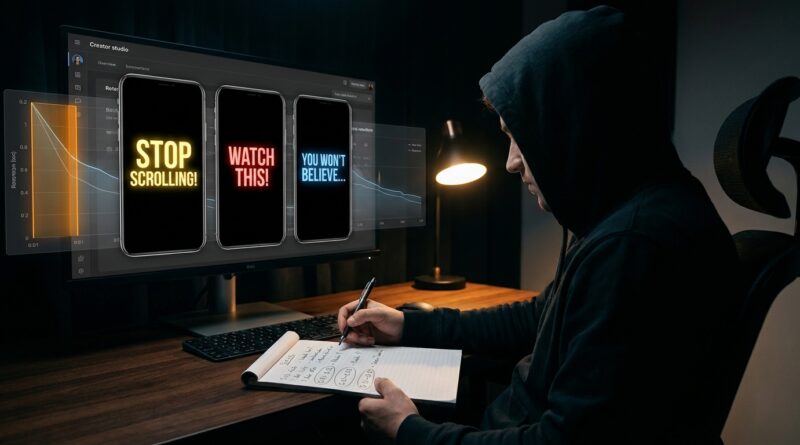
The ‘One-Click Hook Inspector’ Hack: Fix Your First 3 Seconds Before You Waste An Edit
You know this pain if you make short videos regularly. You spend 30, maybe 60 minutes trimming clips, fixing captions, adding zooms, picking music, and polishing every beat. Then you post it, wait, refresh, and watch it sink because the first three seconds never gave anyone a reason to stay. That stings. The worst part is not the flop. It is realizing you poured effort into a version that was doomed before the edit even started. The smarter move is to inspect the hook first, with one click if possible, before you commit to the full edit. Think of it like a movie trailer test for your Reel, Short, or TikTok. If the opening line, visual, or promise does not grab attention fast, no amount of fancy captions will save it. Once you start treating intros as testable parts instead of fixed facts, your editing time gets a lot safer.
⚡ In a Hurry? Key Takeaways
- To answer how to test hooks for tiktok reels and shorts before editing, make 3 to 5 quick intro versions first and compare retention before doing the full polish.
- Use AI clipping and caption tools as a fast sandbox, not as the main creative decision-maker. Keep the body of the video the same and only swap the opening.
- This saves time, reduces over-editing, and helps you build a repeatable system instead of guessing from scratch every post.
Why the first three seconds matter more than your fancy edit
Short-form platforms are brutally fast. People decide in a blink whether to stay or swipe. That means your intro is doing the heavy lifting.
If the opening is vague, slow, or too polite, viewers are gone before your best point shows up. You can have clean captions, sharp cuts, and great sound design. None of that matters if nobody sticks around long enough to see it.
This is why a hook-first workflow matters so much. It helps you find out what is worth editing before you sink time into details.
What the “One-Click Hook Inspector” hack actually is
The name sounds fancy, but the idea is simple. Take one piece of footage or one core video idea. Create several different opening hooks for it. Then preview, test, or post those hook variations in the fastest way possible before doing the full edit.
The “one-click” part usually comes from using tools that can quickly duplicate a project, swap the first few seconds, and auto-generate rough captions or reframes. You are not trying to finish the video yet. You are trying to answer one question fast.
Would anyone stop for this opening?
What you change
Only the intro. Usually the first 1 to 3 seconds, or sometimes the first sentence plus opening visual.
What you keep the same
The body of the video, the core point, and the offer or payoff. This makes your test cleaner. If everything changes, you cannot tell what caused the better result.
How to test hooks for tiktok reels and shorts before editing
Here is the easiest version of the process.
1. Start with the body, not the polish
Find the useful part of your video first. Maybe it is the tutorial step, the reveal, the opinion, or the transformation. That is your “body.” Keep that section ready as the fixed middle of the clip.
2. Write 3 to 5 hook options
Do not overthink it. You want different angles, not perfect writing. For example:
Hook A. “This is why your videos die before people hear the point.”
Hook B. “I wasted an hour editing this before I found the real problem.”
Hook C. “Try this before you edit your next Reel.”
Hook D. “Most creators are fixing the wrong part first.”
Each one frames the same body differently.
3. Build rough cuts only
Use your editing app, AI clipper, or social tool to create rough versions fast. No deep color work. No perfect transitions. No music hunt that takes 20 minutes. Just enough to make the opening understandable.
4. Preview with real people or light posting
You can test in a few ways:
- Show teammates or friends the first 3 seconds only and ask, “Would you keep watching?”
- Use ads or dark-post style testing if your team has that setup.
- Post low-friction versions to Stories, alternate accounts, or small audience segments.
- Check audience retention or hold rate as soon as enough data appears.
5. Only fully edit the winner
Once one opening clearly gets better hold, then spend the time on captions, pacing, effects, and cleanup.
That is the whole hack. Small test first. Real edit second.
What makes a hook worth testing
A good hook usually does one of three things right away.
It starts with a problem
People stop when they feel seen. “Your videos are flopping because the intro is weak” is stronger than “Here are some video tips.”
It creates a curiosity gap
You are giving enough to spark interest, but not so much that the story feels finished. “I changed one line and retention jumped” makes people want the answer.
It promises a clear payoff
Busy viewers want to know what they get. Save time. More views. Better conversions. Less editing waste.
Where AI actually helps, and where it does not
Right now, most AI video tools are very good at volume tasks. They can clip long videos into short ones, resize frames, add captions, and find highlights quickly. That is useful. It is just not the same as finding the best hook.
This is the key mindset shift. Use AI for speed, not for blind trust.
Let the tool produce 5 rough opening variations in minutes. Great. But you still need to judge which one creates attention. AI can help you make options. It cannot guarantee the first three seconds feel urgent, specific, or human enough for your audience.
If you already like fast mobile workflows, you might also enjoy The ‘Native Edit Stack’ Hack: Use Built‑In Tools To Make Reels And Shorts Look Pro In Half The Time. It pairs nicely with this approach because once a hook wins, you can finish the edit much faster using tools you already have.
A simple scoring system for hook testing
If you want to avoid guesswork, score each hook out of 5 on these points:
- Clarity: Do I understand the topic instantly?
- Speed: Does the point start immediately?
- Curiosity: Is there a reason to stay?
- Relevance: Will the right audience care?
- Visual match: Does the opening image support the line?
A hook that scores high on all five is usually worth the full edit. A hook that sounds clever but scores low on clarity often dies fast.
Common mistakes that waste editing time
Testing a new body every time
If you change the whole video for each version, you are not really testing the hook. Keep the middle and ending steady.
Polishing too early
This is the big one. Creators often add captions, overlays, B-roll, sound effects, and transitions before confirming that the opening works. That is backwards.
Making every hook sound the same
If all your intros are minor rewrites of one idea, you are not testing much. Try different angles. Pain point. Bold opinion. Fast promise. Surprise result.
Ignoring visual hooks
The first image matters too. A better opening line can still fail if the visual is slow or generic. Sometimes the fix is not the words. It is starting on the result instead of your face talking.
Who benefits most from this workflow
This is especially useful for busy creators, agencies, and social teams that post often. If you are cutting lots of Reels, Shorts, or TikToks every week, small time savings turn into real breathing room.
It also helps if you have a backlog of long videos, podcasts, webinars, or tutorials. Instead of mass-producing dozens of clips and hoping a few land, you can test openings against the same useful body and put more effort behind the winners.
At a Glance: Comparison
| Feature/Aspect | Details | Verdict |
|---|---|---|
| Traditional workflow | Edit the full video first, then discover after posting that the intro did not hold attention. | High effort, high waste |
| Hook-first testing | Create multiple rough intros, keep the body the same, and test retention before full polish. | Best use of time |
| AI bulk clipping alone | Fast for volume, captions, and reframing, but it does not automatically fix boring openings. | Useful helper, not the strategy |
Conclusion
Short-form feeds are more crowded than ever, and many of the newest AI tools are built to clip, reframe, and auto-caption long videos into Shorts, Reels, and TikToks at scale. That is great for output. It does nothing if your first three seconds are flat. A hook-first workflow gives you a much better deal. You can use those same AI tools as a rapid-testing sandbox, swap intros against the same body, keep the versions that actually lift retention, and stop wasting energy polishing duds. For busy creators and social teams, that means more wins from footage you already have, fewer late nights in the editor, and a process that gets smarter with every post instead of starting over every morning. Test the opening first. Then earn the right to edit the rest.